
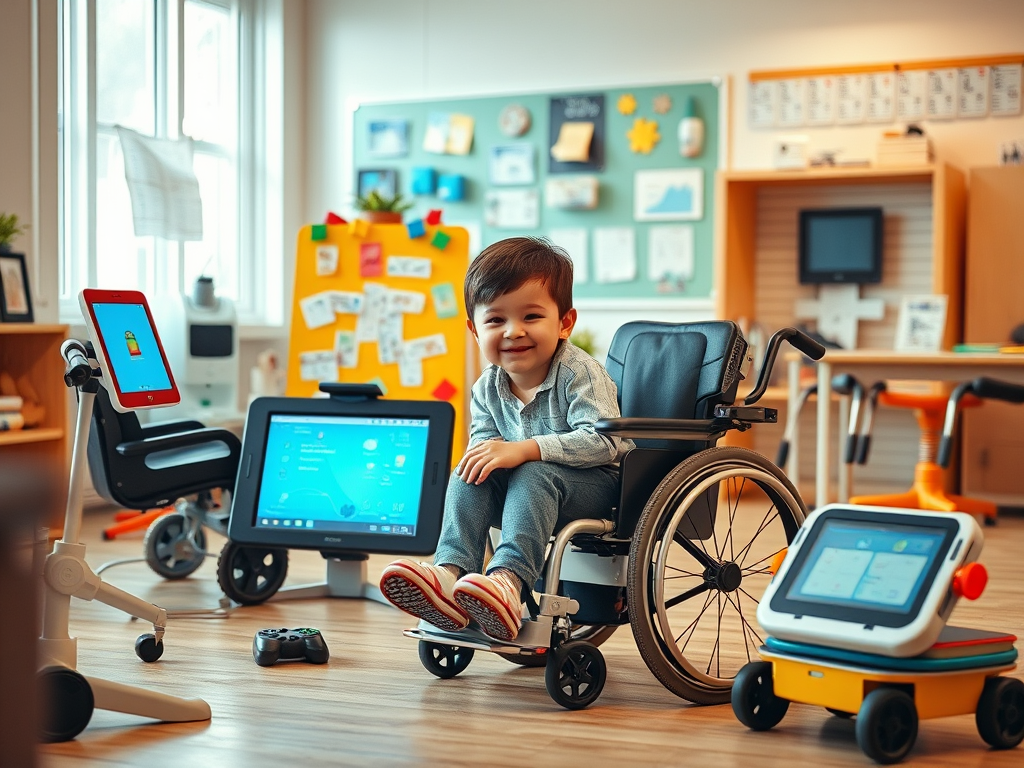
Assistive Technology (AT) plays a crucial role in promoting inclusive and equitable education for students with disabilities across California. Here’s a breakdown of the latest assistive technologies being utilized to support California students:
Communication and literacy
- Augmentative and Alternative Communication (AAC) – These are devices and apps that enable non-verbal or speech-impaired students to express themselves through symbols, text, or synthesized speech.
- Speech-to-text software – Converts spoken words into written text. This benefits students with writing difficulties or limited mobility.
- Text-to-speech software – Reads digital text aloud, supporting students with dyslexia, visual impairments, or reading challenges.
- Screen readers – Specifically designed for visually impaired students. This tool can convert screen content into audio or braille output.
- Accessible digital content – Provides is educational materials in various formats. Some examples are audio books and e-readers, thus ensuring accessibility for all learners.
Learning and academic support
- Personalized learning platforms – AI-powered platforms that adapt to each student’s pace and learning style. This platform is providing tailored content and feedback.
- Virtual and Augmented Reality (VR/AR) – Immersive experiences create engaging learning environments. It can help students with autism or social communication difficulties practice skills in a safe setting.
- Graphic organizers – Digital and physical tools that help students visualize and structure information for better comprehension and organization.
- Mind mapping software – Software like Mindomo supports students in organizing their ideas and planning written work.
- Note-taking software – Applications like Otter and Glean Audio Note Taker help students capture lectures in real time. This simplifies organizing and reviewing notes for better understanding and retention.
Physical access and interaction
- Adaptive keyboards and mouse alternatives – This type of device offers various alternate input methods for students with mobility challenges. It helps accommodate physical disabilities by allowing different ways to interact with technology.
- Head tracking and eye-gaze control systems – This allows students to interact with devices using head movements or eye movements.
- Flexible furniture – Adjustable desks and seating arrangements accommodate students with mobility challenges and promote comfort and proper posture.
- Assistive listening devices – This enhances sound clarity in classrooms. It greatly supports students who are deaf or hard of hearing.
Looking ahead
The landscape of assistive technology is continuously evolving, with exciting advancements on the horizon. The integration of artificial intelligence (AI), wearable technology, and even brain-computer interfaces (BCIs) is so promising. The potential to create even more personalized and impactful learning experiences for students with disabilities in California. By embracing these innovations, California schools can continue to foster inclusive environments where every student has the opportunity to thrive.
